Idaho Camping Guide | Best Campgrounds & Gear Storage
Idaho Camping Guide: Discover the Best Campgrounds, Outdoor Adventures & Smart Camping Gear Storage
If you've spent any time exploring Idaho, you already know why so many people fall in love with camping here. One weekend might take you to a quiet mountain lake surrounded by pine trees. The next could be spent fishing along a river, hiking scenic trails, or relaxing beside a campfire under a sky filled with stars.
Camping in Idaho isn't just about finding a campsite it's about making memories with family and friends while enjoying some of the most beautiful landscapes in the Pacific Northwest.
Of course, every memorable camping trip comes with one thing in common: gear.
Tents, sleeping bags, coolers, camp chairs, lanterns, fishing poles, paddle boards, kayaks, cooking equipment, hiking backpacks, and everything else that makes outdoor adventures comfortable all need a place to live once the trip is over.
That's where having extra storage becomes just as valuable as having the right camping equipment.
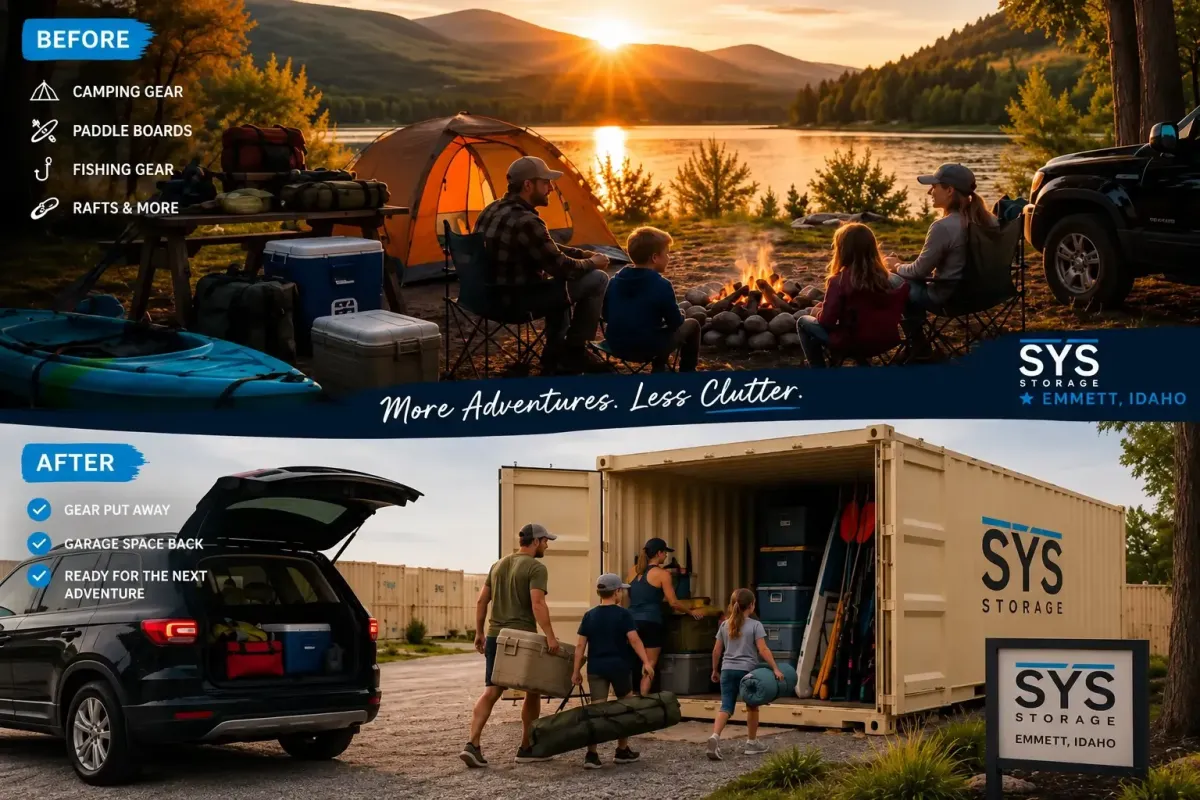
At SYS Storage in Emmett, we help outdoor enthusiasts keep their camping gear organized after every trip. Instead of filling your garage with seasonal equipment, you can store everything in one convenient place until you're ready for your next adventure.
Because we believe one simple idea:
More Gear. More Adventure.
Why Idaho Is One of America's Best Camping Destinations
Idaho is often considered one of the country's best-kept outdoor secrets. While neighboring states attract millions of visitors every year, Idaho continues to offer breathtaking scenery, spacious campgrounds, and countless opportunities to unplug from everyday life.
Whether you enjoy tent camping, RV camping, or dispersed camping in the backcountry, Idaho offers an incredible variety of experiences for every type of camper.
Some of Idaho's most popular camping areas include:
Payette National Forest
Sawtooth National Recreation Area
Priest Lake
Lake Cascade
Bruneau Dunes State Park
Ponderosa State Park
Farragut State Park
Boise National Forest
Salmon-Challis National Forest
Looking for inspiration?
You can explore the best camping in Idaho on Hipcamp to find unique, privately owned campsites.
If you are ready to secure a spot at a public or national park site, you can search and reserve campgrounds across Idaho on Recreation.gov.
Both resources make it easy to discover new places to explore, whether you're planning a family weekend getaway or a longer outdoor adventure.
What Makes Camping in Idaho So Special?
Ask ten campers why they love Idaho, and you'll probably get ten different answers.
Some people come for the peaceful mountain lakes.
Others enjoy miles of hiking trails that lead to breathtaking viewpoints.
Many families return year after year because Idaho offers the perfect mix of adventure and relaxation.
It's a place where mornings begin with fresh mountain air, afternoons are spent exploring nature, and evenings end around a campfire sharing stories.
Whether you're an experienced backpacker or introducing your kids to camping for the first time, Idaho offers something for everyone.
Frequently Asked Questions About Camping in Idaho
What is the best time of year to go camping in Idaho?
Most campgrounds are busiest between late May and early October, although the best time depends on where you're going.
Lower-elevation campgrounds often open in spring, while higher mountain campgrounds may not fully open until early summer due to lingering snow.
Fall camping is another favorite because cooler temperatures, colorful foliage, and smaller crowds create a peaceful outdoor experience.
Where are the best places to camp in Idaho?
That depends on the type of experience you're looking for.
Families often enjoy developed campgrounds with nearby amenities, while experienced campers may prefer more remote locations surrounded by nature.
If you're searching for new places to explore, Hipcamp offers one of the largest collections of camping destinations throughout Idaho, while Recreation.gov allows you to search and reserve many public campgrounds across the state.
Can you camp for free in Idaho?
Yes.
Many areas managed by the U.S. Forest Service and Bureau of Land Management allow dispersed camping at no cost, although rules vary depending on the location.
Before heading out, always check current regulations, fire restrictions, and seasonal closures for the area you plan to visit.
What should I pack for an Idaho camping trip?
Packing depends on the season and destination, but most campers bring:
Tent
Sleeping bags
Sleeping pads
Camp chairs
Cooler
Camp stove
Cooking supplies
Lantern
Flashlights
First aid kit
Hiking boots
Extra clothing
Water bottles
Fishing gear
Paddle boards
Kayaks
Life jackets
Fire-starting supplies (where permitted)
The more often you camp, the more your equipment collection naturally grows.
And that's a good thing.
Every new piece of gear opens the door to another adventure.
Camping Gear Has a Funny Way of Multiplying
If you've been camping for more than a few seasons, you've probably noticed something.
You rarely buy just one thing.
Maybe it starts with a simple tent.
Then someone suggests a better camp stove.
Soon you're adding comfortable camp chairs, a larger cooler, hiking backpacks, fishing equipment, and portable lighting.
Before long, you're loading paddle boards onto the truck or bringing kayaks for the weekend.
Every purchase makes your next camping trip a little more enjoyable but it also takes up more space at home.
And that's where many outdoor families run into the same problem.
The garage slowly disappears.
Instead of parking your vehicle, you're navigating stacks of storage totes, coolers, tents, sleeping bags, and outdoor equipment waiting for the next trip.
Fortunately, there's an easy solution.
Why Properly Storing Camping Gear Matters
Every camping trip leaves you with more than great memories it leaves you with equipment that needs a little care before it's ready for the next adventure.
When camping gear is tossed into a damp corner of the garage or stacked haphazardly in a shed, it can wear out faster than expected. Moisture, dust, pests, and extreme temperature changes can all shorten the lifespan of your outdoor equipment.
Taking a little time to clean, dry, and organize your gear after each trip helps protect your investment and makes packing for the next outing much easier.
Here are a few simple habits that can make a big difference:
Let tents and tarps dry completely before storing them.
Wash cookware and allow it to air dry.
Empty coolers and leave the lids open until they're fully dry.
Store sleeping bags loosely instead of compressed to help preserve their insulation.
Check flashlights and lanterns, removing batteries if they won't be used for a while.
Clean fishing gear and inspect it for signs of rust or damage.
Rinse paddle boards, kayaks, and life jackets if they've been used in muddy or silty water.
A little maintenance today can help your equipment last for many camping seasons to come.
How Do You Organize Camping Gear?
One of the most common questions outdoor enthusiasts ask is:
What's the best way to organize camping gear?
The answer is simpler than many people think.
Instead of storing everything wherever it fits, group your equipment by activity or purpose.
For example:
Camping Essentials
Keep these items together:
Tent
Stakes
Mallet
Ground tarp
Sleeping bags
Sleeping pads
Pillows
Camp Kitchen
Store these items in one tote:
Camp stove
Fuel
Cooking utensils
Pots and pans
Plates and cups
Coffee supplies
Dish soap
Trash bags
Outdoor Recreation
Create another section for:
Fishing rods
Tackle boxes
Hiking backpacks
Trekking poles
Binoculars
Water filtration systems
Water Adventures
If your family enjoys Idaho's lakes and rivers, keep these items together:
Paddle boards
Kayaks
Oars
Life jackets
Dry bags
Water shoes
Organizing your equipment this way means you'll spend less time searching for gear and more time enjoying your next camping trip.
What Happens When Camping Gear Takes Over the Garage?
For many Idaho families, the garage slowly becomes a storage room.
Camping equipment gets stacked beside holiday decorations.
Fishing gear ends up behind bicycles.
Coolers are tucked under workbenches.
Before long, there's barely enough room to walk through, let alone park a vehicle.
If that sounds familiar, you're not alone.
Outdoor adventures naturally lead to more equipment over time.
And honestly that's part of the fun.
Every new piece of gear represents another opportunity to explore somewhere new.
The challenge isn't owning the equipment.
The challenge is finding space to keep it organized.
After You're Done Camping, Store Your Gear with SYS Storage
When your camping trip comes to an end, there's one last step that can make future adventures much easier.
After you've cleaned and dried your equipment, store it somewhere that's organized, secure, and ready for next time.
That's where SYS Storage in Emmett can help.
Instead of filling every corner of your garage with seasonal outdoor gear, you can keep everything together in one convenient location.
Whether it's camping bins, coolers, folding chairs, fishing equipment, paddle boards, or kayaks, having dedicated storage means you always know where your gear is when it's time to plan another trip.
It's a simple way to protect your equipment while reclaiming valuable space at home.
More Gear Means More Adventure
Some people hesitate to buy new outdoor equipment because they simply don't have room for it.
But what if storage wasn't the limiting factor?
Imagine saying yes to:
A larger family tent.
A second kayak.
New paddle boards.
Better fishing equipment.
Mountain bikes for the kids.
Comfortable camp furniture.
A portable griddle for campsite breakfasts.
Having the right equipment often makes outdoor adventures more comfortable, more enjoyable, and more memorable.
At SYS Storage, we believe your garage shouldn't determine how many adventures your family can have.
That's why our motto is simple:
More Gear. More Adventure.
Because when your equipment has a place to stay after the trip, you're free to keep exploring everything Idaho has to offer.
Looking for More Outdoor Adventures Near Emmett?
Camping is just one way to enjoy Idaho's incredible scenery.
If you're planning your next weekend getaway, be sure to explore our guide to mountain resorts near Emmett. From scenic drives to mountain recreation, it's a great resource for discovering even more places to experience Idaho's outdoors.
Frequently Asked Questions About Camping Gear Storage
Where should I store camping gear between trips?
The best place to store camping gear is in a clean, dry, and organized space where it's protected from moisture and clutter. After your camping trip, make sure everything is clean and completely dry before storing it to help extend the life of your equipment.
Can a storage unit help keep camping gear organized?
Yes. Many outdoor enthusiasts use self-storage to keep seasonal camping gear, fishing equipment, paddle boards, coolers, and other outdoor essentials organized in one place. It also frees up valuable garage space at home.
How do I make packing for camping easier?
One of the easiest ways to simplify packing is to organize your gear by category. Keep your tent, sleeping gear, camp kitchen supplies, and recreational equipment together in labeled containers so everything is ready when adventure calls.
How often should camping gear be cleaned?
Camping gear should be cleaned and dried after every trip. This helps prevent mold, mildew, unpleasant odors, and unnecessary wear, especially for tents, sleeping bags, coolers, and cooking equipment.
Is it worth storing seasonal outdoor gear?
If you enjoy camping several times each year, organized storage can save time, reduce clutter, and help protect your investment. Knowing exactly where your gear is makes spontaneous weekend trips much easier to plan.
How to Choose the Right Campground in Idaho
One of the best things about camping in Idaho is the incredible variety of places to stay. Whether you're looking for a quiet weekend by the water or a campground with amenities for the whole family, there's something for every type of camper.
Before making a reservation, ask yourself a few simple questions.
What Type of Camping Experience Are You Looking For?
Your ideal campground depends on how you like to spend your time outdoors.
Family Campgrounds
If you're camping with children or a larger group, look for campgrounds that offer:
Restrooms
Drinking water
Picnic tables
Fire rings
Nearby hiking trails
Easy access to lakes or rivers
These campgrounds provide a comfortable experience while still allowing everyone to enjoy Idaho's beautiful scenery.
RV Camping
Traveling in an RV?
Many Idaho campgrounds offer:
Full hookups
Electrical service
Dump stations
Pull-through sites
Spacious parking
Reservations are recommended during the busy summer months.
Tent Camping
If you enjoy sleeping under the stars and waking up to the sounds of nature, Idaho has countless tent camping opportunities.
Many campers prefer sites that offer:
Shade
Privacy
Nearby hiking trails
Access to fishing
Lake or river views
Backcountry & Dispersed Camping
Looking for solitude?
Idaho's National Forests and public lands provide incredible dispersed camping opportunities for experienced outdoor enthusiasts.
Before heading into remote areas, always:
Check current fire restrictions.
Review local camping regulations.
Carry plenty of water.
Let someone know your travel plans.
Pack out everything you bring in.
Responsible camping helps preserve Idaho's natural beauty for future generations.
Where Can You Find Idaho Campgrounds?
Planning your next adventure doesn't have to be complicated.
If you're searching for unique campsites on private land, scenic ranches, or unforgettable outdoor experiences, we recommend you explore the best camping in Idaho through Hipcamp.
Looking for public campgrounds, National Forest campgrounds, or federal recreation areas?
You can easily find campgrounds across Idaho using Recreation.gov.
Both websites are excellent resources for discovering new places to camp throughout the state.
Idaho Camping Tips Every Camper Should Know
No matter where you're headed, a little preparation can make your camping trip more enjoyable.
Here are a few tips seasoned Idaho campers follow before every adventure.
Check the Weather
Mountain weather can change quickly.
Always review the forecast before leaving and pack layers, even during the summer months.
Leave No Trace
One of the best ways to protect Idaho's incredible landscapes is by following Leave No Trace principles.
Remember to:
Pack out all trash.
Respect wildlife.
Stay on designated trails.
Minimize campfire impacts.
Leave natural areas as you found them.
Responsible camping ensures these beautiful places remain enjoyable for everyone.
Organize Before You Pack
One of the easiest ways to reduce stress is to organize your equipment before loading the vehicle.
When every item has its place, packing becomes quicker, and you're much less likely to forget important gear.
Many experienced campers even keep a printed checklist inside their camping storage bins.
Dry Everything Before Storing It
This is one of the most overlooked steps after a camping trip.
Before putting your equipment away:
Dry tents completely.
Empty coolers.
Clean cooking equipment.
Air out sleeping bags.
Wipe down camp chairs.
Remove dirt from hiking gear.
A little extra time now can help prevent mold, mildew, and unpleasant odors later.
Frequently Asked Questions About Idaho Camping
These questions are written to answer exactly what people search for in Google and AI-powered search engines.
Is Idaho a good state for camping?
Absolutely.
Idaho offers thousands of campsites, National Forests, state parks, mountain lakes, rivers, and public lands, making it one of the best states in the country for camping and outdoor recreation.
What is the best month to camp in Idaho?
June through September are generally the most popular months for camping in Idaho.
Higher elevation campgrounds often don't fully open until early summer because of lingering snow, while lower elevations can be enjoyed much earlier in the season.
Do I need reservations for Idaho campgrounds?
Many popular campgrounds fill quickly during summer.
If you're planning to visit a developed campground, it's a good idea to reserve your campsite in advance through Recreation.gov or another reservation platform.
Can I camp near lakes in Idaho?
Yes.
Idaho is home to hundreds of lakes that offer beautiful camping opportunities, including destinations in the Sawtooth Mountains, Lake Cascade, Priest Lake, Payette National Forest, and many other scenic locations.
What should I do after a camping trip?
After returning home:
Clean your equipment.
Dry everything thoroughly.
Check for damaged gear.
Restock supplies.
Store everything in an organized space so it's ready for your next adventure.
Doing this after every trip makes packing easier and helps extend the life of your camping equipment.
Why do campers need extra storage space?
Camping gear tends to grow over time.
Many families eventually own multiple tents, coolers, fishing gear, camp chairs, paddle boards, kayaks, hiking equipment, and seasonal outdoor supplies.
Keeping everything organized in one place helps reduce clutter and makes preparing for your next trip much easier.
More Adventures Begin With Better Organization
Camping isn't just about escaping into nature.
It's about creating traditions.
It's teaching kids how to build a campfire safely.
It's watching the sunrise over a quiet mountain lake.
It's telling stories around the fire after a long day of hiking.
Those moments are why so many Idaho families continue adding to their collection of outdoor gear year after year.
Every new tent.
Every fishing rod.
Every camp chair.
Every paddle board.
Every cooler.
Every kayak.
Each piece of equipment represents another opportunity to get outside and make memories.
Instead of worrying about where all that gear will fit at home, imagine having it clean, organized, and ready whenever adventure calls.
That's exactly what SYS Storage is here to help with.